For a central AC replacement in Richland, WA, use $4,800-$10,000 installed as a planning range, based on the 2026 Washington central AC estimates published by hvacprojectcost.com. HVACFIND’s 2026 Washington price index provides a second benchmark of $7,450 for a 1,500-2,500-square-foot home, but neither figure is a property-specific Richland quote. Electrical upgrades, duct changes, higher-efficiency equipment, or replacing the furnace can increase the total. At AirCare, we provide heating and air conditioning installation, repair, and maintenance in Richland and the Tri-Cities. This guide separates published price benchmarks from actual installation scope so you can compare estimates without mistaking an equipment price for a finished project.
How much does it cost to replace an AC system in Richland?
A cooling-only replacement and a complete heating-and-cooling replacement belong in different budget categories. The following USD ranges come from hvacprojectcost.com’s 2026 Washington guide, which describes Tri-Cities pricing as similar to Spokane-area pricing rather than the higher-cost Seattle market.
| Replacement scope | Published 2026 Washington range | What to compare |
|---|---|---|
| Central AC only | $4,800-$10,000 | Outdoor unit and compatible indoor cooling equipment; existing heating system retained |
| Heat pump system | $6,000-$13,500 | Heating and cooling equipment, indoor equipment, and backup heating scope |
| Gas furnace plus central AC | $8,000-$15,500 | Furnace, outdoor AC, indoor coil, and installation |
| Single-zone ductless mini-split | $4,000-$8,500 | One zone, not a whole-house ducted replacement |
Price reference date: October 7, 2026. These are published planning estimates, not completed AirCare jobs or verified recent Richland replacement quotes.
HVACFIND’s 2026Q4.2 index lists $7,450 as Washington’s typical installed central AC price for a 1,500-2,500-square-foot home. HVACFIND explicitly describes its figures as modeled estimates rather than quotes, so that number is a useful comparison point, not a promised local price.
A written proposal should identify whether it replaces the condenser and coil, adds an air handler, or includes a furnace. Without that distinction, two totals can look comparable while purchasing substantially different work.
Separate equipment, labor, electrical work, and ducts
The most useful cost breakdown separates the base replacement from work needed to make the new system safe and compatible. Published installed-price ranges generally bundle equipment and installation, so they do not establish reliable standalone Richland equipment or labor prices.
| Cost category | Available USD benchmark | What the proposal should identify |
|---|---|---|
| Equipment | Included within the $4,800-$10,000 central AC benchmark; no separate local range established | Outdoor unit, indoor coil or air handler, model numbers, capacity, and efficiency |
| Installation labor | Bundled in the installed benchmark; no separate local range established | Removal, refrigerant work, connections, startup, and testing |
| Additional electrical work | $300-$2,000 for wiring upgrades reported by The News Tribune | Circuit, wiring, disconnect, or other specifically required work |
| Duct changes | $2,000-$4,000 for duct repairs reported by The News Tribune | Repairs to leaking, undersized, or difficult-to-access ducts |
| Permits and inspection | Project-specific | Required permits, fees, inspection responsibility, and inclusion in total |
The News Tribune’s upgrade figures describe Washington installation costs reported by a Tacoma contractor, not confirmed Richland rates. They help explain the potential scale of additional work but should not be treated as fixed local allowances.
Do not automatically add every row to the central AC range. A base proposal may already include certain electrical connections or duct transitions, and adding those amounts again would double-count the work.
Compare equipment replacement with an expanded installation
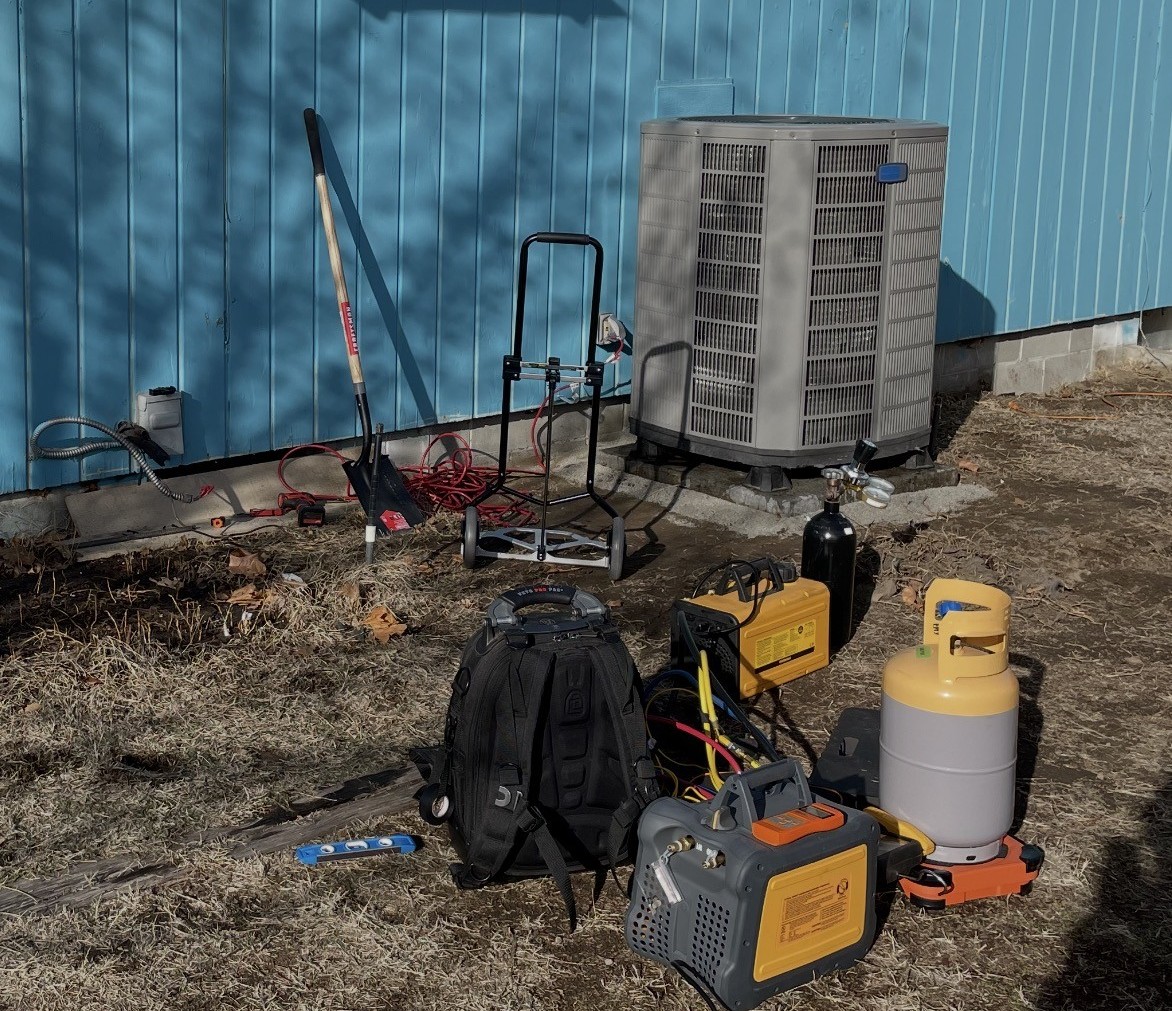
An equipment-replacement-only job can still include substantial professional installation labor. In this context, the phrase means replacing cooling equipment while retaining suitable heating equipment, ducts, and electrical infrastructure, not buying a condenser and installing it yourself.
For a straightforward scenario, consider a home retaining its working furnace and serviceable ductwork. The scope would identify a matched outdoor AC and indoor coil, removal of the old cooling equipment, refrigerant-line evaluation, reconnection, and startup testing; the published $4,800-$10,000 central AC range is the relevant planning benchmark.
An expanded scenario begins with the same replacement but adds a documented wiring problem or undersized return duct. Its proposal should show the base installed price separately from electrical corrections and duct repairs, using the $300-$2,000 and $2,000-$4,000 published upgrade figures only as broader Washington context.
For either scenario, record these details before comparing totals:
- Capacity: Rated tons and BTU per hour; 1 ton equals 12,000 BTU per hour.
- Efficiency: The matched system’s SEER2 rating, not just the outdoor unit’s advertising.
- Installation scope: Every component replaced, retained, repaired, or excluded.
- Total USD price: Taxes, permit fees, required upgrades, and optional accessories clearly distinguished.
These are scope examples, not completed customer projects. Their purpose is to show why the same equipment can produce different installed totals.
Choose capacity and efficiency before comparing prices
Correct sizing and airflow matter more than simply selecting the largest AC within your budget. Richland’s hot, dry summers make cooling performance a practical concern, but square footage alone cannot establish the right system capacity.
A cooling-load calculation considers insulation, windows, sun exposure, ceiling heights, air leakage, and occupancy. A 3-ton system provides 36,000 BTU per hour of nominal cooling capacity, but that does not make it the correct choice for every home of a particular size.
SEER2 means Seasonal Energy Efficiency Ratio 2, a standardized measure of seasonal cooling efficiency. Higher ratings generally indicate more efficient equipment under test conditions, while actual electricity use also depends on installation quality, weather, thermostat settings, and duct performance.
Compare single-stage, two-stage, and variable-speed options on both purchase cost and comfort. Variable-capacity equipment can adjust output more gradually, but savings cannot be promised without considering the existing equipment and household usage.
The indoor coil, outdoor unit, and blower must work together. If a proposal retains the furnace, it should explain whether the blower and coil arrangement support the new system’s required airflow; replacing the outdoor unit alone is not automatically a compatible or economical solution.
Use a dated checklist to compare replacement quotes
A dated, itemized proposal makes the final price easier to understand and reduces disagreement about what is included. Use this October 7, 2026 quote-comparison checklist for estimates covering the same installation scope.
- Record the dates. Include the site visit, proposal date, expiration date, and anticipated installation timing.
- Identify the equipment. List manufacturer, model numbers, capacity in tons, matched-system SEER2, refrigerant, and thermostat compatibility.
- Define removal. Specify refrigerant recovery, disconnection, old-equipment disposal, and cleanup.
- Separate required changes. Identify electrical work, refrigerant-line work, condensate drainage, duct transitions, and duct repairs.
- Address permits. State which permits and inspections are required, who obtains them, and whether fees are included.
- Describe warranties. Separate manufacturer parts coverage from installation labor coverage, including registration requirements and exclusions.
- List financial terms. Show the total USD price, tax treatment, payment schedule, and any optional accessories separately.
- Document exclusions and changes. Explain how concealed problems, additional work, and owner-approved changes affect the final amount.
Final pricing comes from the selected equipment and the work required at the property, not from multiplying square footage by an online rate. Compare totals only after aligning those details.
A lower proposal may be reasonable, but it may also exclude a coil, electrical correction, removal, or labor warranty that another estimate includes.
Consider a heat pump and local service needs
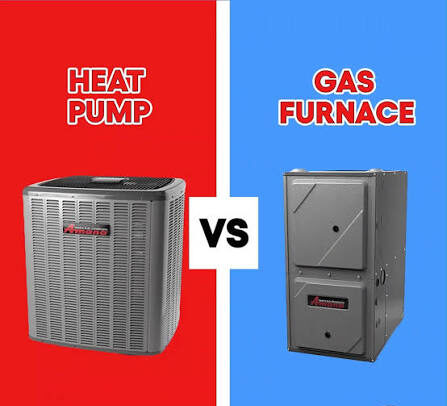
A heat pump is worth comparing when replacement involves both cooling and heating, because it can provide both functions through one refrigeration system. According to hvacprojectcost.com, the published 2026 Washington heat pump range is $6,000-$13,500, compared with $8,000-$15,500 for a gas furnace and central AC combination.
Those ranges do not prove that a heat pump will cost less at your property. Indoor equipment, backup heat, electrical capacity, controls, and cold-weather performance can change the installation scope substantially.
Utility incentives also depend on the account’s actual electricity provider, eligible equipment, and program rules. A Richland address alone is not enough to establish rebate eligibility, and an incentive should not be subtracted from the contract price until its requirements and payment process are clear.
Our Richland HVAC services provide local context for heating and cooling installation, repair, and maintenance. We also provide 24/7 emergency heating and air conditioning service throughout Richland and the Tri-Cities.
If cooling has stopped, diagnosis can help distinguish a repairable fault from a replacement need. If replacement is appropriate, compare a clearly defined cooling-only scope with a heating-and-cooling option rather than assuming a complete overhaul is necessary.
Frequently Asked Questions
How much does it cost to replace an AC system in Richland, WA?
Use $4,800-$10,000 installed as a planning range for central AC replacement, based on hvacprojectcost.com’s 2026 Washington estimates. A Richland contractor’s final price depends on equipment, installation conditions, and required electrical or duct changes.
Can I replace my AC without replacing my furnace?
Yes, an AC replacement can retain a functioning furnace when the blower, indoor coil arrangement, and controls are compatible with the new cooling equipment. The proposal should identify that compatibility and clearly state which components remain.
How much extra does ductwork add to AC replacement?
The News Tribune reports a Washington benchmark of $2,000-$4,000 for repairing leaking, undersized, or difficult-to-access ducts. That is not a fixed Richland charge, and a small duct transition is different from extensive duct repair or replacement.
Does an AC replacement quote include electrical work?
Inclusions vary, so the written proposal should distinguish standard equipment connections from wiring, circuit, or disconnect upgrades. The News Tribune reports $300-$2,000 for wiring upgrades as a broader Washington benchmark, not a guaranteed local price.
Is a heat pump cheaper than replacing an AC and furnace?
Not necessarily, although the published ranges overlap. According to hvacprojectcost.com, 2026 Washington estimates are $6,000-$13,500 for a heat pump system and $8,000-$15,500 for a gas furnace plus central AC; comparable property-specific scopes are needed to determine which costs less.
Start with $4,800-$10,000 as a published 2026 central AC planning range, then narrow the budget with a property-specific proposal. Keep equipment, installation, electrical corrections, duct changes, permits, and warranties visible so the final total reflects the work your home actually needs. At AirCare, we provide local installation, repair, and maintenance services in Richland and the Tri-Cities. Call us at (509) 579-9979 to discuss your system and the next step toward a properly scoped replacement.
Key Takeaways
- The published 2026 Washington central AC replacement range of $4,800-$10,000 is a planning benchmark for Richland, not a property-specific contractor quote.
- HVACFIND’s 2026 Washington central AC index lists $7,450 for a 1,500-2,500-square-foot home and explicitly identifies its figures as estimates rather than quotes.
- An equipment-replacement-only installation can retain the furnace and ducts while still requiring removal, refrigerant work, connections, and startup testing.
- Published Washington upgrade benchmarks include $300-$2,000 for wiring upgrades and $2,000-$4,000 for duct repairs, according to The News Tribune.
- A useful AC replacement proposal identifies capacity, matched-system SEER2, installation scope, permits, warranties, exclusions, and the total USD price.