Is a Heat Pump or Gas Furnace Better for a Tri-Cities Home?
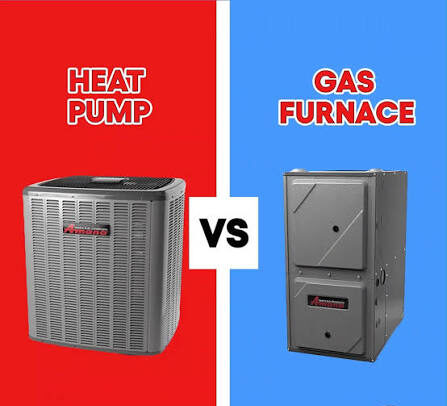
A cold-climate heat pump is often the better choice for a Tri-Cities home that needs both heating and air conditioning, especially when the home has no existing gas service. A gas furnace can be the better replacement when gas infrastructure and a serviceable air conditioner are already in place, while dual fuel combines heat-pump cooling and heating with gas backup for cold weather. At AirCare, we provide heating and air conditioning installation, repair, and maintenance in Richland and the Tri-Cities area. This guide builds on our heating services with a practical comparison for Kennewick, Pasco, and Richland homeowners, including installation scope, annual heating-cost examples, ductwork, and backup heat.
Which system fits your home’s existing setup?
Existing gas service, usable ductwork, and the condition of your air conditioner often matter more than a general ranking of heating systems. A home replacing both heating and cooling has a different financial decision from one replacing only a failed furnace.
Use this table to narrow the options before comparing equipment quotes.
| Home condition | Option worth evaluating first | Reason |
|---|---|---|
| No existing natural gas service | Cold-climate heat pump | Avoids adding gas service, combustion venting, and gas piping |
| Existing gas furnace and working AC | Gas furnace replacement | Preserves usable cooling equipment and existing infrastructure |
| Furnace and AC both need replacement | Heat pump versus furnace plus AC | Compares complete heating-and-cooling systems |
| Sound, properly sized ducts | Ducted heat pump or furnace | Either can use suitable existing distribution |
| Leaky or restrictive ducts | Duct repairs with either option | Equipment efficiency cannot compensate for poor airflow |
| No ducts or isolated additions | Ductless heat pump | Provides zoned heating and cooling without central ducts |
| Existing gas service and gas-backup preference | Dual-fuel system | Combines a heat pump with a compatible furnace |
| All-electric home needing backup | Heat pump with designed electric backup | Backup capacity must fit the heating load and electrical service |
Dual fuel means a heat pump paired with a gas furnace and controls that select the heating source. It is an option, not an automatic requirement for every Tri-Cities home.
Compare installation costs for equivalent systems
A furnace-only quote should not be compared directly with a heat-pump quote that also replaces air conditioning. For a fair comparison, both proposals need to solve the same heating and cooling needs.
According to washingtoncontractors.org, its statewide guide lists installed air-source heat pumps at $7,000-$13,000 and cold-climate heat pumps at $8,000-$15,000 before rebates. Its separate gas-versus-electric guide lists installed gas furnaces at $4,500-$10,000. These are broad Washington planning ranges, not AirCare prices or Tri-Cities estimates, and the furnace range does not include a separate air conditioner.
A like-for-like furnace replacement can have a smaller installation scope when gas piping, venting, ducts, and cooling equipment remain suitable. A heat pump may require a new air handler, electrical circuit, refrigerant lines, or panel work; a gas conversion may require service availability, piping, and venting work.
Ask for itemized proposals covering:
- Equipment model numbers and matched indoor and outdoor components.
- Electrical work, gas piping, venting, and condensate drainage.
- Duct repairs, permits, thermostat, and backup heat.
- Startup testing and removal of old equipment.
Compare the complete installed totals before applying incentives. An advertised rebate is not a guaranteed reduction unless the equipment, household, utility, and installation date qualify.
What do annual heating costs look like locally?
A heat pump can have lower heating-energy costs, but the result depends on electricity prices, gas prices, seasonal efficiency, and backup use. The following examples use equal delivered heat rather than assuming equal fuel consumption.
According to wattcosts.com, Benton PUD’s residential average was 8.81 cents per kWh using 2024 annual data. This is a historical local benchmark, not a current tariff for every Tri-Cities address. For gas, washingtoncontractors.org reports a 2024 Washington residential range of $1.30-$1.60 per therm; the calculation uses its $1.45 midpoint as a regional assumption, not a verified local gas rate.
Assume annual delivered heating demand of 40 million BTU, approximately 11,723 kWh of heat, a 95% AFUE furnace, and no cooling costs. AFUE measures furnace fuel-conversion efficiency; seasonal COP measures heat delivered per unit of electricity used.
| Heating scenario | Calculated annual energy use | Annual energy cost |
|---|---|---|
| Heat pump, seasonal COP 3.0 | 11,723 ÷ 3 = 3,908 kWh | $344 |
| Heat pump, seasonal COP 2.5 | 11,723 ÷ 2.5 = 4,689 kWh | $413 |
| 90% of heat at COP 3.0, 10% resistance backup | 3,517 + 1,172 = 4,689 kWh | $413 |
| Gas furnace, 95% AFUE | 400 ÷ 0.95 = 421 therms | $611 |
At $1.30-$1.60 per therm, the furnace example becomes $547-$674 annually. These illustrative calculations exclude fixed charges, taxes, furnace blower electricity, and separate duct losses; they are not predicted bills for a particular home.
Use your utility bill to find the operating-cost crossover
The cheapest heating source can change as outdoor temperature changes because heat-pump efficiency is not constant. Your actual utility prices are therefore more useful than a statewide claim that one system always costs less.
Benton PUD, Franklin PUD, and City of Richland Energy Services serve different local customers. Use the provider shown on your bill and the applicable usage charges, rather than assuming the Kennewick benchmark applies throughout Richland and Pasco.
For a gas furnace, cost per 100,000 BTU delivered equals the gas price per therm divided by AFUE. For a heat pump, it equals 29.31 × electricity price per kWh ÷ COP.
Using the preceding assumptions:
- Gas: $1.45 ÷ 0.95 = approximately $1.53 per 100,000 BTU delivered.
- Heat pump at COP 3: 29.31 × $0.0881 ÷ 3 = approximately $0.86.
- Heat pump at COP 2: approximately $1.29.
- Resistance backup at COP 1: approximately $2.58.
The energy-cost crossover is approximately COP 1.69 under these assumptions. That is not a thermostat temperature: translating it into a dual-fuel setting requires equipment performance data and the home’s heating load. Fixed gas charges also matter if removing the furnace would allow the household to discontinue gas service entirely.
Choose cold-weather capacity, not just a temperature claim
A heat pump’s ability to operate at a low temperature does not prove it can supply all the heat your home needs at that temperature. Cold-weather selection requires matching available heating capacity to the home’s calculated heat loss.
According to washingtoncontractors.org, Eastern Washington presents a more challenging heating environment than western Washington, and modern cold-climate equipment expands the practical options. Kennewick, Pasco, and Richland homeowners should evaluate equipment for local winter conditions, not rely on advice written for Seattle’s milder climate.
A useful equipment review follows four steps:
- Calculate room-by-room heating and cooling loads using an accepted method such as ACCA Manual J.
- Review the proposed model’s heating output and power consumption at low outdoor temperatures, including published data at 5°F where available.
- Compare that output with the home’s load at the selected local winter design temperature.
- Size backup heat for any shortfall and document how the controls activate it.
Defrost cycles temporarily affect heat delivery, and electric resistance backup can increase energy consumption. A gas furnace avoids the heat pump’s outdoor-air capacity decline, but still needs proper sizing, airflow, and maintenance.
Neither system normally works during a power outage without an appropriately designed backup-power arrangement. A gas furnace still requires electricity for its blower and controls; dual fuel alone is not outage protection.
Balance summer cooling, ductwork, and long-term comfort
A heat pump provides summer air conditioning, while a gas furnace needs separate cooling equipment. That makes cooling condition a central part of the decision in the Tri-Cities, where hot summers create a substantial need for dependable AC.
A functioning newer air conditioner may support keeping a furnace-based arrangement. If both systems are aging, compare a complete heat-pump installation with a complete furnace-and-AC installation rather than valuing heating equipment alone.
Ductwork deserves equal attention. Undersized returns, leaks, and restrictive filters can undermine either system; a heat pump’s longer heating cycles can make distribution problems especially noticeable. A ductless layout avoids central duct losses, but indoor-unit placement must account for bedrooms, closed doors, and separate living areas.
Our practical AirCare framing is straightforward: evaluate a heat pump first when a home needs heating and cooling without gas infrastructure; evaluate furnace replacement when existing gas and usable AC simplify the job; evaluate dual fuel when compatible gas backup fits the homeowner’s priorities. The final choice should follow the home’s load, equipment condition, and installation requirements.
Maintenance remains necessary whichever option you choose. Heat pumps need attention to airflow, coils, refrigerant operation, and drainage; furnaces also require combustion and venting checks. Homes with fuel-burning appliances should have carbon monoxide alarms.
Frequently Asked Questions
Is a heat pump or gas furnace better for a Tri-Cities home?
A cold-climate heat pump often fits homes needing both heating and cooling, particularly without existing gas service. A gas furnace can make more sense when gas infrastructure and usable AC are already present. Dual fuel is another option when gas backup fits the home’s requirements.
Do heat pumps work in Tri-Cities winters?
Modern cold-climate heat pumps can provide heating below freezing. The key is whether the selected model delivers enough heat at the home’s winter design temperature. Any capacity shortfall needs a planned backup source.
Is a heat pump cheaper to run than a gas furnace in Kennewick?
It can be, especially with favorable electricity prices and good seasonal performance. Using a historical Benton PUD electricity benchmark and explicitly assumed gas pricing, the guide’s heat-pump examples cost less than its furnace example. Actual savings depend on current usage charges, heating demand, and backup operation.
Should I keep my gas furnace as backup for a heat pump?
Keeping a furnace may make sense if it is serviceable and compatible with the proposed heat pump and controls. A dual-fuel design needs coordinated airflow, equipment matching, and changeover settings. Keeping gas backup is not necessary for every properly designed cold-climate heat-pump installation.
Will a gas furnace work during a power outage?
A typical gas furnace will not operate without electricity because its blower, ignition, and controls need power. Backup operation requires an appropriately designed power source and connection. Adding gas backup to a heat pump does not itself provide outage protection.
Choose a system around your home, not around a blanket claim that heat pumps or furnaces always win. Start with existing gas service, AC condition, ductwork, and a heating-load calculation, then compare equivalent installation proposals and energy costs using your utility bill. At AirCare, we provide heating and cooling installation, repair, and maintenance in Richland and the Tri-Cities, along with 24/7 emergency service. Our heating services are a starting point for evaluating whether repair, furnace replacement, a heat pump, or a dual-fuel arrangement fits your home.
Key Takeaways
- A cold-climate heat pump is often a strong choice for a Tri-Cities home that needs both heating and cooling and has no existing gas service.
- A furnace-only replacement should be compared with a heating-only need, while a heat pump should be compared with furnace-plus-AC replacement when both systems are due.
- At an assumed 40 million BTU annual heating demand, 8.81 cents per kWh, and seasonal COP 3.0, illustrative heat-pump heating energy costs approximately $344 annually.
- At the same heating demand, a 95% AFUE furnace using gas priced at an assumed $1.45 per therm costs approximately $611 annually for heating fuel.
- Low-temperature heat-pump operation does not guarantee enough capacity to meet a home’s winter heating load.
- A dual-fuel system combines a heat pump with a gas furnace, but both heating sources still require electricity.